
 English
 Español
 Pусский
 日本語
日本語 한국어
한국어 हिन्दी
 Indonesia
 Melayu
 Tiếng Việt
Photochemisches Mikrokanal-Reaktorsystem
A microchannel photochemical reactor system is an advanced reaction platform designed to combine the advantages of microfluidics and photochemistry in a highly efficient and controllable way. It uses narrow channels, typically ranging from tens to hundreds of micrometers in width, to guide liquid reactants through a compact illuminated reaction zone. By exposing the flowing stream to carefully controlled light sources, the system enables photochemical transformations to occur with excellent precision, high safety, and improved productivity compared with conventional batch reactors.One of the key benefits of a microchannel photochemical reactor is its large surface-to-volume ratio. Because the channels are extremely small, light can penetrate more effectively into the reacting fluid, reducing the problem of uneven irradiation that often occurs in larger vessels. This improved light distribution allows photochemical reactions to proceed more uniformly and efficiently. In addition, the small internal volume minimizes the amount of reactive material present at any given time, which greatly enhances operational safety, especially for reactions involving unstable intermediates, hazardous reagents, or highly exothermic processes.The continuous-flow nature of the system is another major advantage. Reactants are pumped through the microchannels at controlled flow rates, allowing precise adjustment of residence time, mixing intensity, temperature, and photon exposure. This level of control makes it possible to optimize reaction conditions quickly and reproducibly. Fast mixing in microchannels also reduces concentration gradients, helping to improve selectivity and yield. As a result, the reactor is well suited for both discovery-scale experiments and scalable production processes.Microchannel photochemical reactor systems are widely used in organic synthesis, fine chemicals, and pharmaceutical development. They can support a variety of light-driven reactions, such as cycloadditions, oxidations, halogenations, isomerizations, and radical-mediated transformations. These systems are especially valuable when short-lived excited states or highly reactive radical species must be generated and consumed efficiently. By providing a controlled environment, the reactor helps improve reaction consistency and reduces side reactions.Another important feature is energy efficiency. Modern systems often use LED light sources or other targeted illumination technologies that deliver photons at specific wavelengths matching the absorption properties of the reactants or photocatalysts. This targeted approach reduces wasted energy and lowers heat generation. Some systems also integrate temperature control modules, back-pressure regulators, and inline monitoring tools, enabling real-time process optimization and safer operation.In research and industrial settings, the compact design of a microchannel photochemical reactor system offers practical advantages. It requires less space than traditional photoreactors and can be integrated into automated platforms for high-throughput screening or continuous manufacturing. The modular structure also makes it easier to maintain, modify, and scale by numbering up channels rather than increasing reactor size.Overall, a microchannel photochemical reactor system represents a powerful tool for modern chemical processing. It combines efficient light utilization, excellent mass and heat transfer, enhanced safety, and precise process control. These characteristics make it an increasingly important technology for sustainable synthesis and advanced reaction engineering.
Produkt
Kategorie:
-
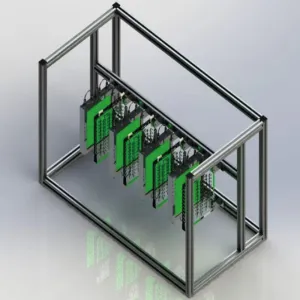
Photochemischer Mikrokanalreaktor
Ihre Klassifizierung: Mikrofluidische photochemische ReaktorenAnsichten: 831Nummer:Veröffentlichungszeit: 2026-07-10 09:48:18Photochemische Mikrokanalreaktoren integrieren Mikroreaktionstechnologie mit Photochemie und dienen als Plattform, die eine effizientere, präzisere und sicherere Nutzung von Lichtenergie für chemische Reaktionen ermöglicht. Im Vergleich zu herkömmlichen Batch-Tankreaktoren erzielen sie erhebliche Verbesserungen bei der Nutzung von Lichtenergie, der Stoff- und Wärmeübertragung, der Reaktionsgeschwindigkeit und der Betriebssicherheit, was sie zu Kerngeräten für die moderne Feinchemie, die pharmazeutische Synthese und die Herstellung neuer Materialien macht.
Nachrichten
Kategorie:
Keine Suchergebnisse!
Fall
Kategorie:
Keine Suchergebnisse!
Video
Kategorie:
Keine Suchergebnisse!
Herunterladen
Kategorie:
Keine Suchergebnisse!
Rekrutierung
Kategorie:
Keine Suchergebnisse!
Empfohlene Produkte
-
NEWS
Photochemischer Mikrokanalreaktor
Erfahren Sie mehr



 WhatsApp
 Telefon