
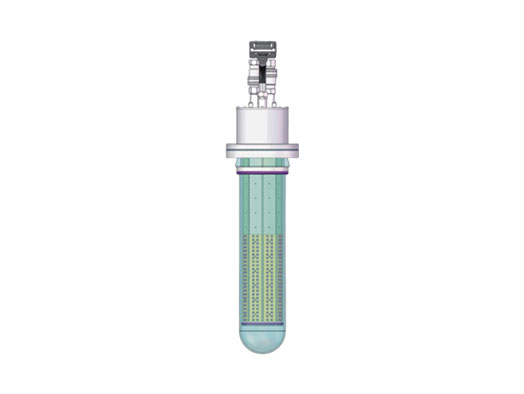
Choosing the right LED parallel light reactor equipment is a critical step for laboratories,
pilot plants, and industrial users that need stable illumination, efficient optical performance, and repeatable
experimental conditions. This guide explains the core concepts, major equipment types, key technical parameters,
selection criteria, and practical comparison points in clear, SEO-friendly English. It is designed for use on
blog pages, category pages, and industry landing pages, with a structure that supports search visibility and
user readability.
The term LED parallel light reactor generally refers to a light reactor system that uses
parallel, uniform, and controlled LED illumination to support photochemical reactions, photocatalysis,
photoelectrochemical studies, algae cultivation, material testing, and other light-driven processes. Because
illumination quality directly affects reaction efficiency, temperature control, and experimental consistency,
equipment selection should be based on optical performance, mechanical design, wavelength accuracy, cooling
capability, and process compatibility.
LED parallel light reactor equipment is a light-based reaction system that delivers concentrated but evenly
distributed LED illumination across a working area. Unlike general-purpose lighting, this equipment is designed
for controlled scientific or industrial applications where light intensity, wavelength, beam uniformity, and
exposure time must be precisely managed.
In most applications, the system consists of a light source module, reactor chamber, cooling system, control
interface, mounting structure, and optional accessories such as sensors, stirring systems, and safety shields.
The goal is to produce a stable parallel light field with minimal energy loss and minimal variation across the
illuminated surface.
| Core Element | Main Function | Selection Importance |
|---|---|---|
| LED light source | Provides the required wavelength and intensity | High |
| Optical design | Ensures parallel, uniform light distribution | High |
| Reactor chamber | Holds samples and reaction vessels | High |
| Cooling system | Controls heat generated during operation | High |
| Control system | Adjusts power, timing, and operating conditions | Medium to High |
| Safety components | Protects users and stabilizes operation | High |
The quality of the light source can significantly influence experimental outcomes. For photochemical and
photocatalytic applications, consistent photon delivery is essential for repeatability, yield, and process
scalability. LED parallel light reactor equipment offers several advantages over traditional lamp-based systems,
including lower heat output, longer service life, higher energy efficiency, and more precise wavelength control.
In modern laboratory and industrial settings, the demand for LED parallel light reactor equipment
continues to grow because users want better control over light-driven processes. Whether the goal is research,
product development, or small-scale production, a well-selected reactor improves stability, reduces operating
costs, and supports more reliable data collection.
Below are the main advantages commonly associated with LED parallel light reactor systems.
| Advantage | Description | Practical Benefit |
|---|---|---|
| Energy efficiency | LED technology consumes less power than many traditional light sources | Lower operating cost |
| Low heat generation | Reduced thermal load helps maintain stable reaction conditions | Improved temperature control |
| Wavelength selectivity | Specific LED bands can be selected for targeted applications | Better process accuracy |
| Long service life | LED components often last far longer than conventional lamps | Less maintenance downtime |
| Uniform illumination | Parallel optical design improves brightness consistency | More reliable results |
| Fast switching | LEDs can be turned on and off instantly | Precise time control |
| Compact design | Systems can be made smaller and easier to integrate | Space-saving installation |
LED parallel light reactor equipment is used across a wide range of industries and research fields. The exact
design depends on the application, but common use cases include:
Each application places different demands on spectral output, irradiation area, sample geometry, and thermal
management. For that reason, selecting a reactor should always begin with a clear understanding of the intended
process.
Selecting the right LED parallel light reactor equipment requires balancing optical performance, process needs,
safety, and long-term operating cost. The following criteria are the most important selection factors.
The LED wavelength range determines which materials or reactions can be effectively activated. Some systems use a
single wavelength, while others provide multiple channels or tunable spectra. Common bands include ultraviolet,
visible, and near-infrared regions, depending on application requirements.
When comparing systems, users should verify whether the wavelength matches the absorption characteristics of the
target substance, catalyst, or biological system. A mismatch can reduce efficiency and lead to inconsistent
results.
Light intensity, often expressed as irradiance, is one of the most important performance indicators. Too little
intensity may slow the reaction, while too much intensity may cause overheating, degradation, or side effects.
The ideal level depends on sample size, reaction kinetics, optical path length, and desired throughput.
Parallel light reactor equipment should produce even illumination across the full working area. High uniformity
supports repeatable testing and reduces edge effects. This is especially important in scale-up studies, where
non-uniform light distribution may distort performance data.
Heat management is a major issue in all LED parallel light reactor systems. Although LEDs generate less heat than
some traditional lamps, the system still needs reliable cooling to protect components and maintain a stable
process environment. Cooling may be air-based, liquid-based, or hybrid, depending on power density and
application.
Modern equipment should offer accurate control over power output, exposure duration, start-stop timing, and
operational modes. Advanced control functions may include programmable cycles, intensity adjustment, and data
logging. These functions are valuable for research workflows and reproducibility.
The chamber size should match the expected sample volume, vessel shape, and number of samples. A reactor that is
too small may limit throughput, while an oversized system may waste energy and increase cost. The best choice is
one that closely fits the application while leaving enough room for operation and maintenance.
Reactor materials must be resistant to light exposure, chemicals, temperature fluctuations, and cleaning agents.
Common materials include aluminum alloys, stainless steel, quartz, borosilicate glass, and engineering plastics.
Material choice affects durability, optical transmission, corrosion resistance, and safety.
Because LED reactors may involve strong light output and heat, safety features are essential. These can include
shielding, emergency stop functions, overtemperature protection, electrical protection, and interlock systems.
Safety design is especially important in laboratory and educational environments.
Different reactor types are used for different process requirements. The following table provides a basic
comparison of common equipment categories.
| Type | Characteristics | Typical Use |
|---|---|---|
| Bench-top LED parallel light reactor | Compact, easy to install, suitable for small batch work | Lab research and screening tests |
| Modular LED reactor system | Expandable design with flexible configuration | Development and pilot studies |
| Multi-channel LED light reactor | Supports several wavelengths or operating modes | Advanced research and comparative experiments |
| High-power LED reactor | Designed for larger irradiance and higher throughput | Industrial testing and scale-up |
| Custom integrated reactor | Built for specific process and chamber requirements | Specialized production environments |
Technical specifications are the foundation of any LED parallel light reactor equipment selection guide. Before
purchasing or specifying a system, users should review the following parameters carefully.
| Specification | What It Means | Why It Matters |
|---|---|---|
| Wavelength | Peak spectral output of the LED source | Determines reaction compatibility |
| Irradiance | Light power delivered per unit area | Affects reaction speed and performance |
| Uniformity | Consistency of light distribution across the surface | Ensures repeatable results |
| Working distance | Gap between light source and sample | Influences beam shape and intensity |
| Temperature range | Operating range of the reactor chamber | Protects samples and equipment |
| Power consumption | Electrical input required for operation | Impacts operating cost and infrastructure |
| Control accuracy | Precision of power and timing settings | Supports experimental repeatability |
| Service life | Expected operational lifespan of LEDs and components | Reduces replacement frequency |
| Dimensions | Overall size of the reactor system | Important for space planning |
| Interface options | Control panel, software, or external connectivity | Supports workflow integration |
The following example table shows how buyers often compare LED parallel light reactor equipment. Actual values
vary by design and application, but this format is useful for evaluating product categories and planning
requirements.
| Parameter | Entry-Level System | Mid-Range System | Advanced System |
|---|---|---|---|
| Wavelength options | Single band | Multiple standard bands | Multi-channel or tunable |
| Light intensity control | Basic adjustment | Fine control | High-precision programmable control |
| Uniformity | Moderate | Good | High |
| Cooling method | Air cooling | Enhanced air cooling | Liquid or hybrid cooling |
| Automation | Limited | Partial automation | Full process control |
| Best for | Simple lab tests | Routine research | Advanced development and scale-up |
To simplify decision-making, use the checklist below when reviewing LED parallel light reactor equipment.
Even a well-designed reactor can underperform if operating conditions are not properly managed. Several factors
can influence the final result:
Container shape, depth, and surface exposure all influence how light reaches the material. A deeper vessel may
reduce penetration, while a shallow system may improve exposure consistency.
The distance light must travel through the sample or vessel affects absorption and reaction behavior. Shorter
path lengths often improve efficiency in strongly absorbing systems.
For liquid-phase reactions, mixing improves mass transfer and helps distribute light exposure more evenly across
the sample volume.
Environmental temperature can alter reaction rates and equipment performance. Stable room conditions help maintain
consistent results.
Time settings must be matched to the process goal. Insufficient exposure can reduce conversion, while excessive
exposure may create unnecessary energy use or side reactions.
Proper maintenance extends service life and preserves optical performance. The following practices are widely
recommended for LED parallel light reactor equipment:
Many buyers focus only on power output and ignore other important design factors. Common mistakes include:
For website owners and content publishers, LED parallel light reactor equipment is a strong topic for
high-intent industry pages because it combines technical terms, application keywords, and comparison-driven
search behavior. Users often search for phrases such as LED parallel light reactor equipment,
parallel light reactor selection guide, LED reactor specifications, and
photochemical reactor equipment. Well-structured content that defines the equipment, explains
benefits, compares specs, and offers selection advice is more likely to rank for informational and commercial
queries.
To improve page relevance, use the keyword naturally across headings, introductory paragraphs, tables, and
descriptive sections. Avoid keyword stuffing, but keep terminology consistent. Search engines generally favor
content that demonstrates topical depth, clear formatting, and direct user value.
Its main purpose is to provide controlled, uniform LED illumination for light-driven reactions, testing, and
research applications.
Uniformity ensures that all samples or all parts of a sample receive similar illumination, improving accuracy and
repeatability.
In many cases, yes. LED systems usually offer better energy efficiency, lower heat generation, longer lifespan,
and more precise spectral control.
The first specification should usually be the wavelength or wavelength range, because it determines whether the
system matches the intended process.
No. Different applications require different intensities, chamber sizes, cooling methods, and optical
configurations.
LED parallel light reactor equipment plays an increasingly important role in modern laboratory and industrial
light-processing applications. The best system is not simply the one with the highest power rating, but the one
that offers the right wavelength, consistent irradiance, strong uniformity, reliable cooling, and suitable
chamber design for the target process.
When selecting LED parallel light reactor equipment, users should focus on application compatibility, technical
performance, safety, maintenance, and long-term operating value. By using a structured evaluation process and
comparing specifications carefully, buyers can choose equipment that improves process stability, supports
repeatability, and reduces total operating cost.
For blogs, product category pages, and industry resource pages, this topic offers strong SEO potential because it
aligns with search intent around reactor design, LED illumination, photochemical systems, and equipment
comparison. A clear, keyword-rich, and well-organized page can help attract relevant traffic while providing real
value to readers.
```
HINZUFÜGEN:Gebäude 7, Industriepark Z Acer Z Hi, Lian Tang Avenue, Stadt Shanghai, Reihe C, Jiangsu
Tel.:0512-65560736 / 0512-65371556
Mobile:+86 13584913897 / +86 13771738377 (Vertrieb)
E-Mail:jkzdhsm@yeah.net
Diese Website verwendet Cookies, um sicherzustellen, dass Sie das beste Erlebnis auf unserer Website erhalten.
 English
 Español
 Pусский
 日本語
 한국어
 हिन्दी
 Indonesia
 Melayu
 Tiếng Việt



 WhatsApp
 Telefon
Kommentar
(0)